Blog
Why we built Inbox Chaos — and what it taught us about learning under pressure
Every product starts with a frustration. Inbox Chaos started with one that felt embarrassingly simple: why do smart, motivated, well-trained people consistently struggle with their inboxes? Not their inboxes specifically — the inbox was always a stand-in for something larger. The experience of being a capable professional, knowing what good looks like, and still finding that under real pressure the knowing and the doing came apart. The problem wasn’t organisation. It was judgment.
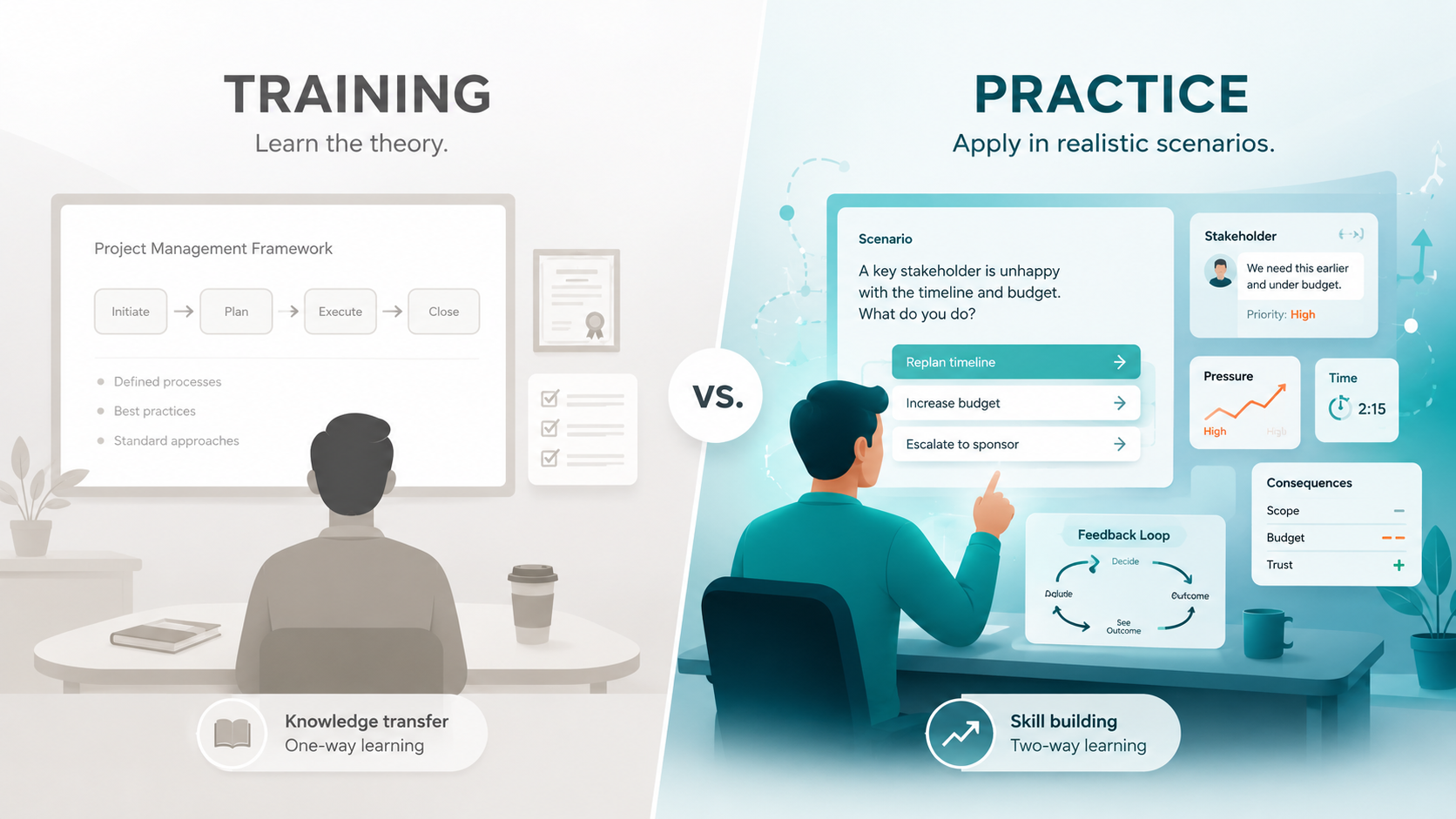
The difference between training and practice
Organisations spend significant money developing their people. Workshops, e-learning modules, leadership programmes — the investment is real and the intention is genuine. So why does so much of it fail to produce a visible change in how people perform under pressure? The answer lies in a distinction the L&D industry has struggled to make clearly: training transfers knowledge. Practice builds capacity. They are not the same thing and confusing them is expensive.
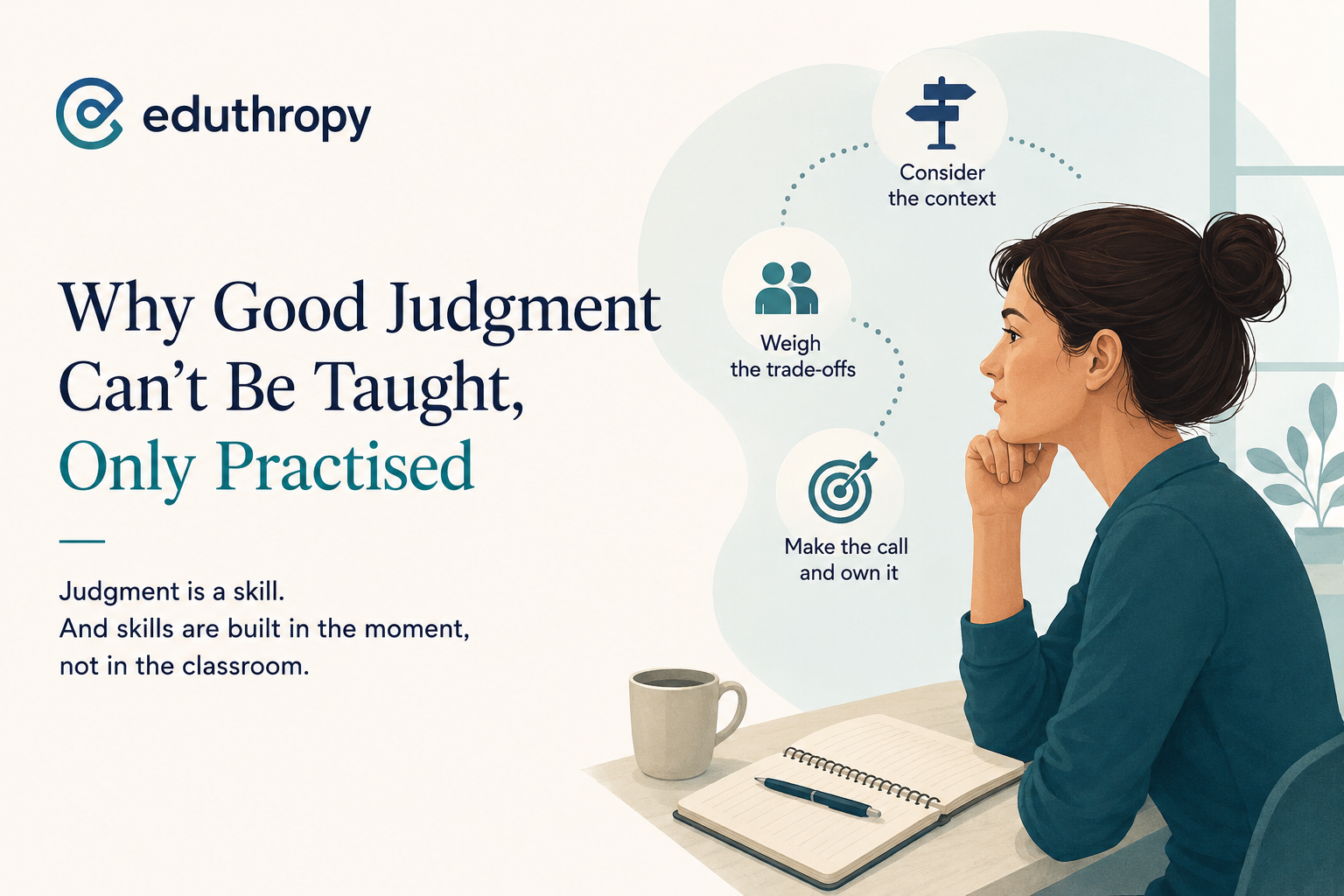
Why good judgment can’t be taught — only practised
You sit in the session, nod along, leave with the certificate and three weeks later, when a real situation arrives, the framework is nowhere to be found. This isn’t a failure of effort. It’s a failure of method. Judgment is not a concept you can absorb. It’s a capacity you build through repetition, consequence, and the particular discomfort of making a call when you don’t have enough information and the clock is running.

What your decision patterns are telling you
Every person who makes decisions under pressure has patterns, characteristic ways of responding when demands pile up, information is incomplete, and something needs to be protected while something else is let go. Most people are only dimly aware of their own patterns. In the moment, the pattern feels like a reasonable response to the specific situation. It doesn’t feel like a pattern at all. That invisibility is the problem. A habit you cannot see is a habit you cannot change.